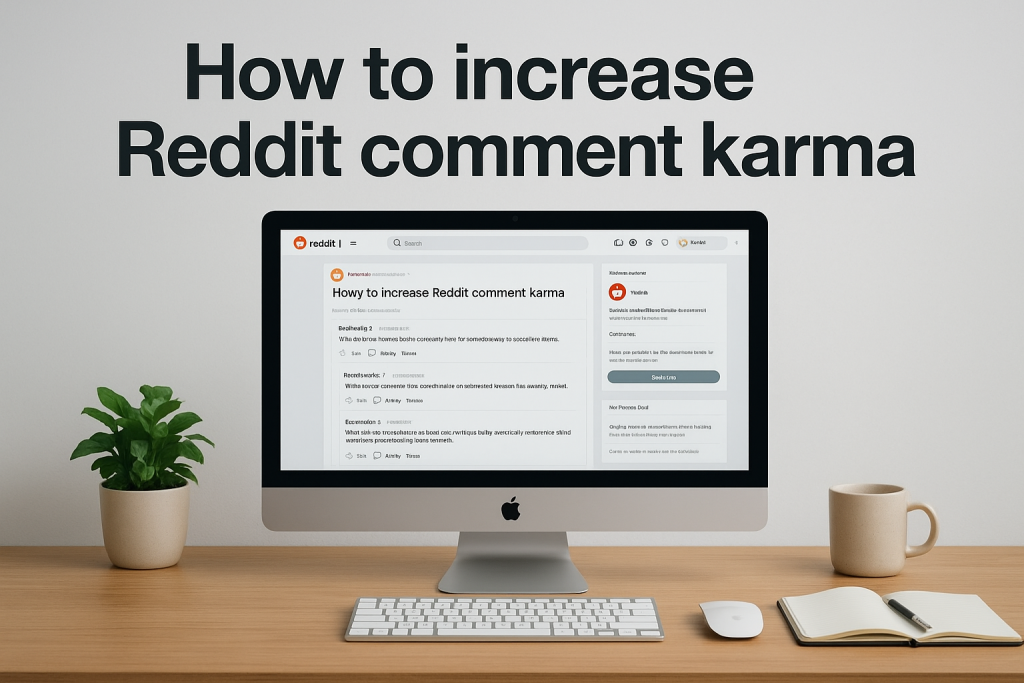
If you want to raise Reddit comment karma without cutting corners, do the simple things extremely well: leave sharp, useful comments in the subreddits you actually understand, and post them when people are watching. Lead with a one-line answer, add a quick example or source if it clarifies, jump into rising threads early, and stick to each subreddit’s rules. Then, keep the thread alive by answering follow-ups. Track what’s working with the Reddit API or Pushshift, but don’t automate your posting or spam templates. You’ll get the odd spike when a comment catches fire. Real growth arrives from steady, relevant replies over weeks and months. Account age and history influence filters, so build credibility and be patient.
Key Takeaways
- Start with a crisp first sentence that gives the answer up front.
- Match your comment’s tone and format to the subreddit’s culture (not a one-size-fits-all script).
- Show up early in rising threads and keep replying to maintain visibility.
- Use tools for monitoring patterns; avoid automated posting and mass templating.
How Reddit comment karma works
People often blur the line between post karma and comment karma. They both reflect community approval, but the mechanics and best tactics differ. If your goal is comment karma, think in replies, not headlines.
Comment karma goes up with upvotes, down with downvotes. Reddit also runs vote fuzzing and validation in the background, so numbers can wobble before settling. Your profile shows a net total across approved posts and comments; it hides raw vote counts and can shift after validation.
What comment karma is and why it matters:
Comment karma is the running net of upvotes on your comments. Higher totals often make it easier to participate in some subreddits, reduce the odds of getting auto-filtered, and signal to readers that you’re worth listening to. I’ve watched accounts that reply consistently and helpfully get more leeway from moderators and more second looks from readers.
How Reddit calculates visible karma:
Reddit stores each upvote and downvote, then applies validation that can change what you see. Votes are also weighted by signals like account age and community health. Expect some early noise. One myth: a single viral comment will permanently “unlock” visibility. It helps, sure, but durable reach still comes from showing up with value, repeatedly.
Differences between comment karma and post karma:
Post karma comes from submissions. Comment karma comes from replies. Posts tend to hinge on timing, original media, or an irresistible headline. Comments win via relevance, clarity, and good timing in the right threads. A great reply in a visible discussion beats a brilliant one buried six levels deep in an ignored post.
What types of comments attract upvotes
Context rules everything. A reply that crushes in r/PersonalFinance might flop in r/funny. The job is to read the room and adjust.
In practice, four flavors tend to work: genuinely useful answers, sharp jokes, insightful or well-sourced explanations, and empathetic responses. Which one lands depends on timing and novelty.
Useful and informative comments:
Give people an immediate fix. In r/HomeImprovement, “Use a PH2 driver and these self-drilling E-Z Ancor toggles; pre-mark studs and you’ll avoid tear-outs” beats a five-paragraph theory on drywall shear strength. Specific, actionable, done.
Funny and relatable comments:
Humor plays best where humor lives. A one-liner at the right moment in r/AskReddit or r/funny often outperforms a clever but bloated setup. Punch up, not down. And if the thread is serious, skip the bit entirely.
Insightful, research-backed comments:
Technical communities reward receipts. A two-sentence summary of a relevant paper with a clean link usually beats confident hand-waving. If you know, say so. If you don’t, be honest. Credibility compounds.
Empathetic and community-building comments:
Support subs value people, not podiums. “That sounds brutal. Two small things that helped me: a free legal clinic at the local bar association and keeping a daily log” can earn more goodwill (and upvotes) than a wall of legal theory.
Discovery, drafting, posting, and follow-up tactics
The repeatable pattern is boring but effective: find the right thread, write a tight comment, post while the post is heating up, then keep the conversation going. Skipping one step costs you reach.
Treat each comment like a micro-article with a headline, a point, and a payoff.
Discovery and scouting threads:
Hang out in the rising tab and use subreddit filters. Set alerts when a post crosses your target comment threshold, or spin up a lightweight script that flags fast early engagement. And don’t chase a thread that’s already saturated with perfect early answers—you’re too late.
Drafting a high-value comment:
Draft offline if you can. Open with the answer in one line. Follow with one to three sentences of proof: a quick example, a short why, or a reputable link. Keep paragraphs skinny. Big gray walls get scrolled past.
Posting and reply position:
Early matters. The first 10–30 minutes of a rising thread are gold. A direct reply to OP is great for readers scanning for solutions; replying under a top comment can also hitch a ride if you add something the parent missed.
Follow-up and engagement:
When your comment catches, stick around. Answer questions, add a clarifier, or share a tiny update. One time I dropped a single data point I’d left out—a cost estimate—and watched the upvotes snowball overnight.
Choosing the right subreddits and threads
Subreddit culture beats subscriber count. A small, focused community can carry you further than a loud, massive one.
Pick spaces where your knowledge actually fits. Lurk a bit. Learn the local tone and rules before you wade in.
Niche subreddits versus large communities:
Niches have better signal. A quick stabilizer-lube tip (205g0 + holee mod) will shine in r/MechanicalKeyboards and evaporate in r/technology. New commenters often aim at huge subs and end up invisible. Optimize for engagement rate, not raw headcount.
Reading subreddit culture and rules:
Study recent top comments. Note voice, formatting quirks, and go-to sources. The fastest path to downvotes is sounding like you’re from somewhere else. Also read the rules and stickies; some subs ban certain links, AI content, or even common phrases.
Thread selection: rising versus new:
Rising threads have momentum and upside. New threads let you be first but can stall. I usually watch rising posts hitting ~50–200 comments—enough traffic to matter, enough runway left to contribute.
Timing and visibility strategies
Timing beats polish for the first burst of visibility. A perfect answer posted too late is just… late.
Know when your target sub is awake. Post early in threads that are actively heating up.
Time zones and peak hours:
Figure out the center of gravity. U.S.-heavy subs peak mid-to-late afternoon Eastern Time, Tuesday–Thursday. Hobby subs do better in evenings and weekends. Business subs hum during workdays. Test, track, adjust.
Thread age and comment velocity:
In the first 10–30 minutes, most threads are still forming. That’s your window. Past an hour, you’ll need a thread that’s still accelerating. I once hit an AMA at minute 12 with a compact question plus context—hundreds of upvotes by morning.
Reply position and parent comment choice:
OP replies reach skimmers; high-parent replies can ride the parent’s visibility if you add a missing angle. Both routes work. Choose based on how the thread is flowing right now, not a fixed rule.
Comment composition: tone, length, formatting, humor, sourcing
Clarity wins. Relevance wins more. Formatting helps only when it fits the sub’s expectations.
Front-load the point, keep structure tidy, and cite sources when accuracy matters.
Tone and voice:
Mirror the room. Technical spaces want precise, neutral language. Casual subs reward candid, friendly replies. In r/PersonalFinance, my calm, conservative phrasing consistently outperforms punchy “do this now” energy. Sarcasm in serious threads? Usually punished.
Optimal length and structure:
Lead with a one-line summary, then 1–3 supportive sentences. Short paragraphs are your friend. In most communities, 40–120 words is the sweet spot. Go deep only where depth is the culture.
Formatting and readability:
Use bold and code sparingly, and only if the sub expects it (r/learnprogramming, for example). Break things up. Use bullets for checklists. Don’t drop naked, mile-long URLs—label links so people know what they’ll get.
Using humor and emotion safely:
Self-deprecating humor beats punching down. When emotions are high, lead with empathy. Being kind is often “more correct” than being right.
Tools and analytics to track comment performance
If you measure, you’ll notice patterns sooner. Native tools plus light third-party support are enough for 95% of people.
The usual toolkit: Reddit’s API, Pushshift for historical context, and simple dashboards.
Reddit API and native tools:
The Reddit API gives programmatic access to posts and comments. I keep a tiny monitor that pings me when target subs have posts spiking in the first 15 minutes. Respect rate limits, cache results, and you’ll be fine.
Pushshift and historical analysis:
Pushshift makes it easy to look back at trends: which days and times yield top comments, which formats win, and what “top” looked like six months ago. That last point matters; communities drift.
Third-party apps and dashboards:
Tools like Reddit Insight or a Google Sheet fed by the API can track “avg upvotes by comment length,” “time-to-first-upvote,” and “sub-by-sub hit rate.” Automate discovery, not your voice.
Reddit etiquette, rules, and moderator policies
Rules vary and bots are fast. Mods can and will enforce their local culture.
Read the rules, avoid stealth promotion, and be measured if something gets removed.
Reading and following subreddit rules:
Some subs ban advice on legal/medical topics, some ban link shorteners, and some restrict self-promotion to a weekly thread. There’s no global standard. Read the sidebar and the stickies every time you enter a new sub.
Self-promotion and disclosure:
If you have a conflict of interest, say it. Hidden promotion is the fastest way to tank trust (and eat a ban). Weirdly, transparency often earns you more upvotes than silence.
Handling moderator actions and appeals:
If a comment gets pulled, send a calm modmail explaining your intent and ask how to rework it to comply. Don’t escalate. Most mod teams will tell you what went wrong, and some will greenlight a fixed repost.
Case studies and annotated comment examples
Examples teach better than maxims. Study what works in your target subs and borrow the structure and timing—never the text.
Case study: concise technical fix in a niche subreddit:
In r/Appliances, a user posted a clacking dryer. A top reply: “Quick check: inspect the idler pulley and belt. On many Whirlpool models, replacing the idler pulley fixes this in ~20 minutes.” Short, specific, and with a time estimate. When asked, the commenter added a photo and a part diagram link. Done.
Case study: empathetic reply in a support subreddit:
In r/Divorce, a high-performing reply opened with “I’m sorry you’re dealing with this” and then offered two practical steps: “Call your local bar association’s free legal clinic and start a daily interaction log.” It didn’t try to be a lawyer. It tried to help.
Case study: witty one-liner in a large community:
In r/AskReddit, the thread energy was pure chaos. A single deadpan line landed exactly on the beat and picked up thousands of upvotes. Not because it was the funniest joke ever. Because it was perfectly timed.
Aged accounts, new accounts, and practical account choices
Account age matters. New accounts face heavier filters and more suspicion. You can still build karma—just expect to earn it the old-fashioned way.
If you need quick credibility for outreach, an aged account with a clean, relevant history helps. Long term, growing your own is safer.
New accounts and starter strategies:
Start in hobby subs you genuinely care about. Add useful, non-promotional comments for a few weeks. New accounts that sprint into promotion usually get clipped fast.
Pros and cons of aged accounts:
Aged accounts with solid histories often slip past some auto-filters and get a bit more benefit of the doubt. That’s why marketers try to buy them. If you go that route, make sure the account’s past aligns with your intended voice; a mismatch is louder than you think.
Comparison: New Reddit Account vs Aged Reddit Account:
| Feature | New Account | Aged Account |
|---|---|---|
| Initial visibility | Low | Higher |
| Moderation scrutiny | Higher | Lower |
| Time to credibility | Weeks to months | Immediate |
| Risk of mismatch with brand | Low | Higher if history differs |
Buying aged accounts can speed things up, but it carries ethical and reputational risk. If you acquire one, audit its history line by line.
Handling karma loss, vote fuzzing, and moderator appeals
Karma can dip suddenly. It’s often not a crisis—it’s the system doing its job.
Check what happened, read any mod messages, and adjust.
Understanding vote fuzzing and invalidation:
Reddit obscures exact counts and runs vote validation to catch manipulation. Overnight swings can stabilize after recalculation. Don’t call it brigading until you’ve ruled out the boring explanation.
Recovering from removed comments or bans:
If a comment is removed, reach out via modmail with a short, polite note: what you meant, what rule you may have tripped, and how you plan to fix it. Offer to edit and repost if allowed. Public call-outs almost never help.
When to walk away:
Some threads are a time sink—or coordinated dogpiles. Don’t donate your weekend to an unwinnable argument. Move on and invest where your contribution stands a chance of helping someone.
Practical comparison: Organic Reddit engagement versus paid Reddit Ads
Organic and paid do different jobs. Ads buy reach. Organic comments build trust. When coordinated, they’re better than either alone.
Use ads for predictable exposure and organic replies for reputation and relationships.
Organic comment engagement:
Organic replies are slow to scale but high in authenticity. Automation is tempting and almost always obvious. Redditors are great at sniffing out scripts.
Reddit Ads and promotion:
Reddit Ads deliver impression volume, not comment karma. If you run ads, park yourself in the comments and answer questions. That pairing consistently performs better than “run ads and vanish.”
Table: Organic Reddit Marketing vs Paid Advertising:
| Aspect | Organic | Paid |
|---|---|---|
| Cost | Time investment | Monetary |
| Authenticity | High | Lower unless well-integrated |
| Predictability | Low | High |
| Best for | Reputation, long-term trust | Short-term reach |
A practical play: sponsor a post, then show up in the comments with transparent, helpful answers. It feels human, and it works.
Advanced considerations and expert recommendations
Beyond the basics, the returns diminish quickly—but a few tweaks keep you ahead.
Use data to refine where you comment, test your openings, and keep a small library of modular replies you can personalize fast.
A/B testing comment styles:
Track openers, length, and link usage across similar threads. My tests found “direct solution first” beat “context then solution” in help-focused subs. Not everywhere, not always. But enough to matter.
Building a modular reply library:
Keep short checklists you can tailor. In r/photography, for example, I keep a three-bullet exposure sanity check (shutter, aperture, ISO) and swap in lens-specific tips per thread. Copy-paste without editing gets flagged fast.
Reputation management and cross-subreddit identity:
A consistent username and recognizable voice across related subs builds durable reputation. Adapt tone and depth per community, but stay you. The pros are chameleons, not shape-shifters.
If you’re curious how karma intersects with monetization and ethics, the article at Make money from Reddit has additional context on sustainable approaches.
Conclusion
Raising Reddit comment karma isn’t magic. It’s craft plus timing plus respect for the community. Pick a few subreddits, study what wins there, post early with a tight opener, and keep the thread alive. Track patterns. Adjust.
One routine I’ve used and recommended: choose three target subs, lurk and log patterns for two weeks, then post one concise, high-value comment per day while measuring outcomes. It’s unglamorous. It works.
FAQs
- How quickly can I increase my Reddit comment karma? You can see fast bumps if a comment goes viral, but steady, sustainable gains generally take weeks to months of consistent, relevant participation.
- Does using links in comments reduce upvotes? Links help when they clearly add value and the sub allows them. Dropping an unexplained link often gets downvoted. Add a one-line summary and use reputable sources.
- Can I buy karma or use vote services? Buying votes or using manipulation services violates Reddit rules and can get you suspended. Buying aged accounts is a different practice but comes with ethical and reputation risks—tread carefully.
- Why did my comment suddenly lose karma? Usually vote invalidation, removals, or normal downvotes. Reddit’s validation and vote fuzzing can also change what’s visible temporarily. Check mod messages before reacting.
- Is it better to post long, detailed comments or short ones? Lead with a short, clear line and add depth if the subreddit expects it. Technical forums reward long form; casual threads don’t.
- Should I use automation to find threads? Automation is great for alerts and monitoring. Don’t automate posting or blast templates. Use tools to inform human judgment, not replace it.